Go Ask Your Dad T-shirt Design: A Real-World Embroidery Review
As a designer who has spent years turning digital concepts into stitched reality, I have seen countless graphics that look great on a screen but fall apart under the needle. When I first laid eyes on Go Ask Your Dad T-shirt Design, my initial reaction was one of cautious optimism. It carries a distinct mood—playful, slightly rebellious, and undeniably relatable. But for an embroidery product reviewer, the question is never just about the visual concept; it is about how that concept survives the translation from vector to thread.
This review comes from the perspective of someone preparing this design for actual client work, specifically looking at its viability for custom apparel, boutique merchandise, and personalized gifts. We are moving beyond the marketing copy to discuss the practicalities of stitch density, fabric texture, and the overall value this piece brings to a finished product.
The First Stitch: Visual Personality and Layout
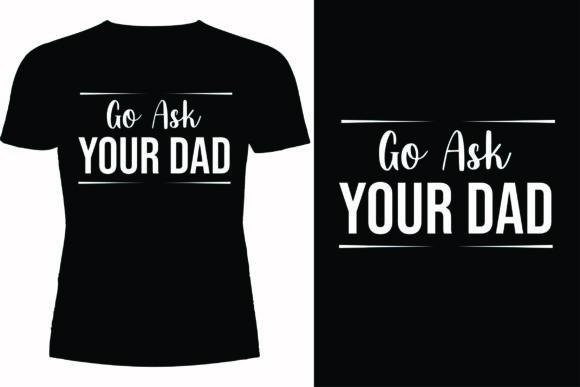
The core strength of Go Ask Your Dad T-shirt Design lies in its straightforward humor. It is not trying to be a masterpiece of abstract art; it is designed to make a statement. In the world of machine embroidery, simplicity is often the key to longevity. The layout appears balanced, suggesting that it will sit well on the chest of a sweatshirt or centered on the back of a tote bag. The typography feels bold enough to hold up against the texture of woven fabrics, which is a critical factor for any embroidery file intended for commercial use.
When evaluating the design's personality, it screams "casual." It fits perfectly into the realm of handmade products where authenticity matters. Whether you are an Etsy seller creating holiday gifts or a craft business owner stocking a booth, this design offers a conversational hook. It invites interaction, which is exactly what makes a custom apparel item successful. However, the visual appeal relies heavily on execution. If the lettering becomes too thin during digitizing, the punchline gets lost. If the spacing is off, the joke falls flat.
Real-World Application: From Concept to Finished Product
Let us imagine a real scenario. You are preparing a collection of baby items for a new arrival gift set. You decide to pair Go Ask Your Dad T-shirt Design with a soft cotton onesie. The design promises a "Father Figure" vibe that resonates with new parents. But here is where the rubber meets the road. Baby clothes require delicate handling. The fabric is thin, stretchy, and sensitive to tension.
If you attempt to embroider this design directly onto a thin jersey knit without proper stabilization, the puckering could ruin the garment. The design might work beautifully on a sturdy hoodie or a canvas tote bag, where the fabric can support the weight of the stitches. For a tote bag design, the durability is even more appealing. A canvas bag takes abuse, and a well-executed embroidery job adds a layer of professional polish that screen printing sometimes lacks.
I also considered using this as a patch for a denim jacket. The humorous text would stand out against rough denim, adding character to a handmade product. However, if you plan to use this for commercial embroidery on caps, you must be wary of the curved surface. Small details tend to distort on the front panel of a hat. The design needs to be scaled appropriately to ensure the message remains legible when wrapped around the curve.
Where Caution Is Required
Not every project is a fit for this specific graphic. There are specific scenarios where Go Ask Your Dad T-shirt Design might struggle. If you are working with a very small hoop size, such as those used for cuff embroidery or tiny patches, the detail level could become problematic. Tiny lettering often disappears in the stitching process, especially if the thread count is high.
Dark fabrics present another challenge. While the description mentions CMYK print readiness, embroidery relies on thread contrast rather than ink saturation. If the background is black and the design uses light colors, you may need to add a heavy underlay to prevent the dark fabric from showing through the stitches. Conversely, on white fabric, the design pops, but you must ensure the thread quality is high enough to resist fading after multiple washes.
Textured fabrics like terry cloth or boucle can hide the definition of the design. The stitches might get lost in the loops of the material. Similarly, if the design includes dense fill areas, you risk creating a stiff, board-like feel on garments that should remain soft, such as baby clothes or loungewear. Always check the stitch density before committing to a large production run.
Technical Considerations for the Designer
To ensure the best results, there are several technical steps you must take. First, test the design on scrap fabric that matches your final material. This allows you to see how the stitch density interacts with the weave of the cloth. Do not skip this step, as it saves money on ruined inventory.
Review the thread colors carefully. Since the source file is editable, you have the freedom to adjust hues to match your brand palette. However, remember that embroidery threads have different sheens and opacities compared to digital RGB files. A color that looks vibrant on your monitor might appear dull in thread form. Use a physical swatch book to verify your choices.
If the design includes fine lines or intricate corners, inspect them closely. These are the first areas to break down or blur during the stitching process. Ensure you are using the correct stabilizer for the fabric type. A cut-away stabilizer is often necessary for stretchy materials to maintain shape over time, while tear-away might suffice for stable wovens.
Impact on Brand and Customer Trust
In the competitive market of craft business and online selling, the quality of your embroidery speaks volumes about your professionalism. A sloppy application of Go Ask Your Dad T-shirt Design can damage customer trust. On the other hand, a crisp, well-placed stitch job elevates the perceived value of the item significantly.
Customers buying personalized gifts or holiday embroidery pieces are looking for quality. They want to know that the item will last. When you present a finished product where the text is clear, the edges are clean, and the fabric lies flat, you signal reliability. This is crucial for Etsy sellers and small shop owners who rely on repeat customers and positive reviews.
The design also serves as a versatile asset for various projects. It can transition from a sweatshirt embroidery piece to a kitchen towel or a pillow cover. This versatility allows you to create cohesive collections, reinforcing your brand identity across different product types. Just ensure that the scale is adjusted correctly for each medium to maintain visual harmony.
Final Verdict on Practicality
Go Ask Your Dad T-shirt Design is a solid choice for designers looking to add a touch of humor to their portfolio. Its strength lies in its clarity and broad appeal, making it suitable for everything from baby embroidery to adult apparel. However, success depends entirely on your technical execution. Take the time to test, stabilize, and refine the placement.
Before you start mass-producing, confirm the licensing terms. Ensure you have the rights to sell finished items created with this digital embroidery file or to distribute the design assets themselves. Once you have verified the legal side and tested the mechanics, this design can be a valuable addition to your toolkit. It is not just a graphic; it is a potential bestseller, provided you treat it with the respect it deserves in the embroidery studio.
For those ready to dive in, remember that the difference between a good project and a great one often comes down to preparation. Check your hoop size, compare light and dark backgrounds, and always prioritize the integrity of the stitch work. With the right approach, Go Ask Your Dad T-shirt Design can deliver a finished product that delights customers and stands the test of time.